
Livoton

Road construction

Use of foam concrete in road construction: advantages, innovations and economic efficiency

The use of non-autoclaved monolithic foam concrete as a base for road pavement is a modern technological solution that can dramatically increase the durability of highways, reduce construction costs and solve complex engineering challenges on difficult soils.

About the solution

Use of foam concrete in road construction

Thanks to the unique combination of low weight, high strength and low thermal conductivity, foam concrete becomes a profitable alternative to traditional sand and gravel cushions.

Parameter selection

Key advantages of the technology

01

Efficient load redistribution and monolithic strength

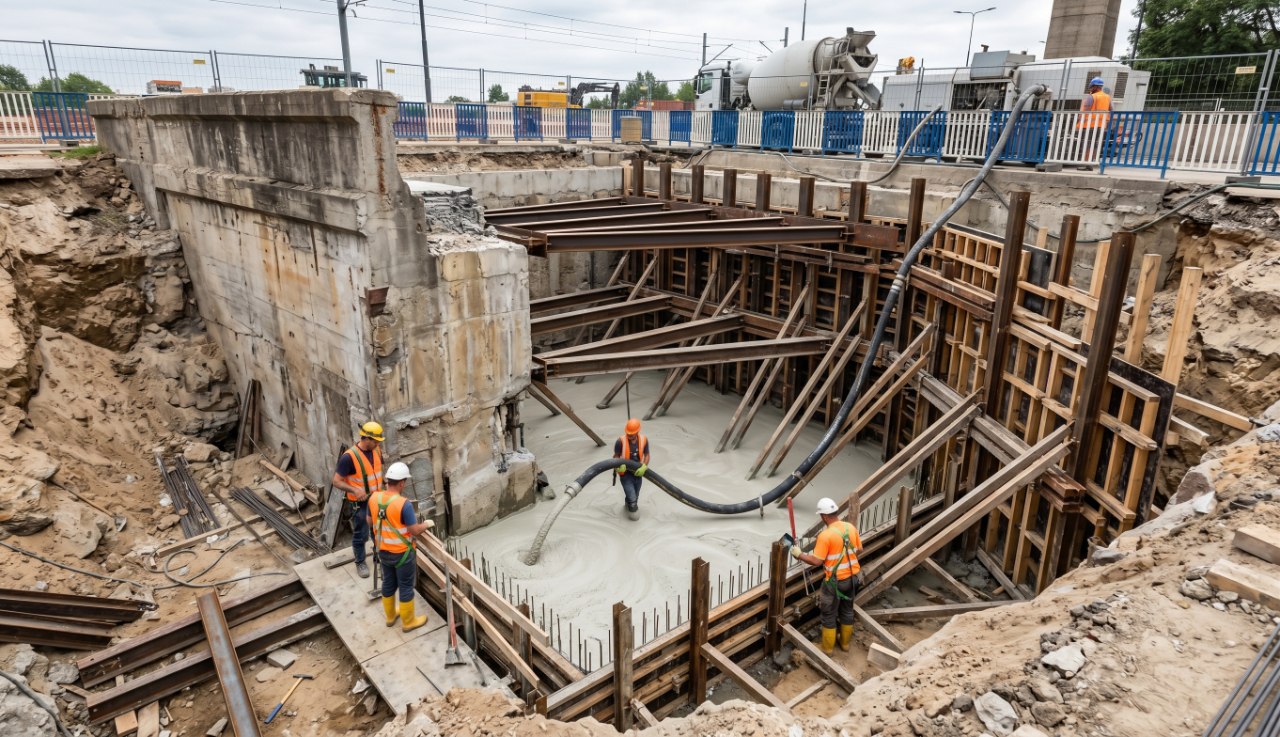
Casting foam concrete creates a solid monolithic slab with high flexural strength that evenly distributes the forces from vehicle wheels over a much larger area of the soil foundation. This prevents loose materials from being pressed into soft or swampy foundations and protects the upper road surface layers from subsidence.

02

Significant reduction in structural weight

The density of foam concrete ranges from 150 to 800–1600 kg/m³. Due to the low weight of the material, the load on the soil foundation is reduced by up to 85% compared to a standard gravel and asphalt structure. This makes it an ideal solution for road construction on weak, peaty and peat-swampy soils.

03

Exceptional thermal insulation and frost resistance

In winter: due to the low thermal conductivity coefficient, foam concrete prevents freezing and frost heaving of the underlying soil. Ice forms less often on the road surface. In summer: due to heat accumulation, the material prevents excessive heating of asphalt in the sun, preventing its melting and deformation. In permafrost zones: it keeps the soil in a frozen state, preventing thawing and erosion of the foundation.

04

Ease of installation and filling of hard-to-reach voids

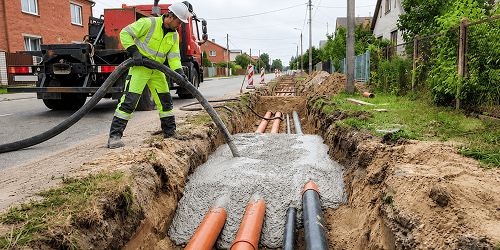
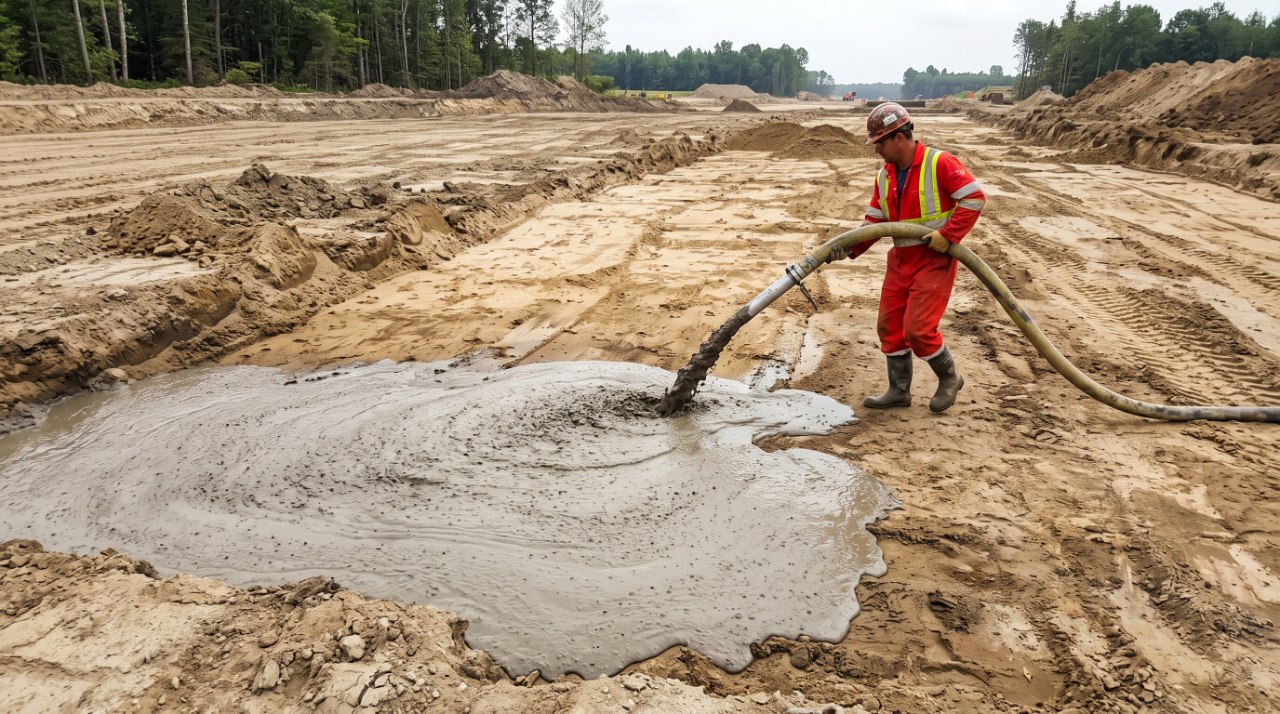
Liquid foam concrete easily self-levels, filling the most complex washouts, cavities, trenches and technological voids. At the same time, there is no risk of damaging already-laid underground utilities or pipes.

05

Reduction of labor costs and no need for heavy machinery

Foam concrete does not require compaction or vibration. This allows road rollers and vibratory compactors to be excluded from the technological cycle, significantly reducing the amount of equipment involved, human resources and work time.

06

Convenience of laying and repair of urban utility networks

The high thermal insulation properties of the material allow new utilities (water supply, sewerage, cable networks) to be laid at a shallow depth — only 40–50 cm from the surface. Since foam concrete is easily cut and processed with tools, repair work or pipe replacement in the future is fast and with minimal cost.

07

Economic benefit and durability

Costs for costly excavation and replacement of heaving soil are reduced. The need for traditional building materials (sand, gravel, crushed stone) decreases. Maintenance and major repair costs of the road surface throughout the entire service life are significantly reduced.

Practical procedure

How to discuss the project

1

Describe the site

Provide the facility type, area or volume, location and description of the foundation.

2

Provide design requirements

Specify the function of the layer, required characteristics and expected operating conditions.

3

Verify suitability

Agree on technical feasibility, material characteristics and installation technology with the designer.


Contacts

Let's discuss your project

Leave your contact details and briefly describe the task — a specialist will clarify the details and help with a solution.

Consulting, material selection and documentation requests.
Email for reply and additional communication.
Popular international phone number formats are supported.

Request form

Format: +380 (__) ___-__-__
Maximum 1000 characters0 / 1000

* Required fields: name, email and phone.