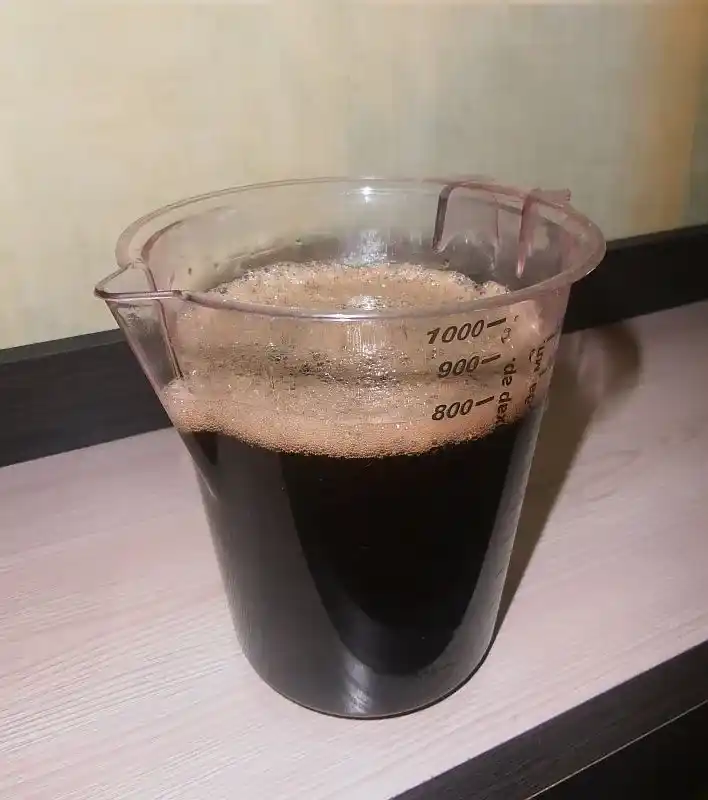

Prepare the working solution
For the working solution, dilution of 1:40 is recommended — 2.5 l of foaming agent per 97.5 l of water. Water temperature must not exceed 35 °C; practically it is reasonable to work with water at about 30 °C.

Livoton PFA
Protein foaming agent for stable foam concrete production. Key characteristics, application technology, indicative mix designs, work rules and delivery.
The foaming agent directly affects the formation of the porous structure of foam concrete. The uniformity of the material, its density and the predictability of the production process depend on the quality and stability of the foam.
Livoton is designed to produce fine-dispersed and stable foam, which is used as a structure-forming component in foam concrete production. The foam must retain its structure during feeding, mixing and forming of the finished mix.
The production result depends on the entire mix design: cement type, aggregate properties, water amount, mixing regime and foam generator parameters. A properly selected foaming agent allows more stable control of the density and uniformity of foam concrete.
The Livoton protein base is designed to work in cement systems with the formation of stable foam. Such foam is evenly distributed in the mix and contributes to the formation of a uniform porous structure of the finished material.
Livoton is manufactured on the basis of animal proteins using components that provide the required stability and technological properties of the foam. The product is aimed at producing foam concrete with controlled characteristics and repeatable results.
The main physical, chemical and technological indicators of Livoton are given below to evaluate the product properties and select the working regime.
| Parameter | Value |
|---|---|
| Colour | Dark brown |
| Physical state | Liquid |
| Density | 1.10 kg/dm³ |
| Solubility | In water |
| Expansion ratio | 15 |
| Foam yield from 1 l | 615 l, depending on the foam generator type |
| Application temperature | Down to −10 °C |
| Shelf life | At least 12 months |
Livoton is used together with a foam generator to obtain stable fine-dispersed foam. The technology can be used for foam concrete production with subsequent curing under normal conditions, as well as in heat treatment modes — depending on the mix composition and production process.
The product is non-combustible and is intended for technological use in the production of lightweight concrete. During work, the requirements of the technical documentation, safety rules and equipment operating recommendations must be observed.
The foaming agent should be stored in hermetically sealed polyethylene containers at temperatures from −5 to +30 °C. After freezing, the product must be fully thawed without adding water and thoroughly stirred until a homogeneous consistency is restored.
A stable result is ensured by correct dilution of the concentrate, foam generator settings and even introduction of the finished foam into the cement mix.
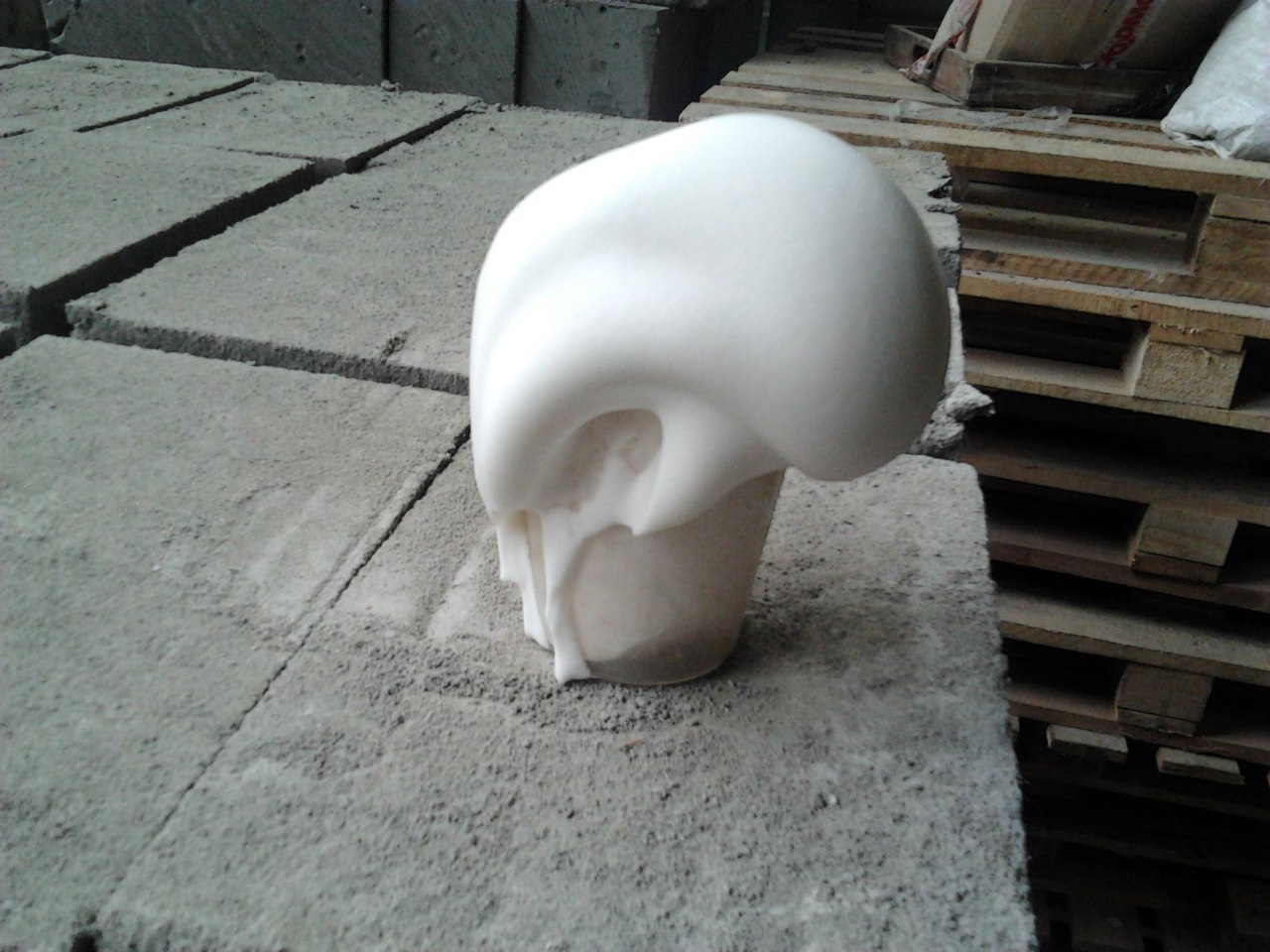
For the working solution, dilution of 1:40 is recommended — 2.5 l of foaming agent per 97.5 l of water. Water temperature must not exceed 35 °C; practically it is reasonable to work with water at about 30 °C.
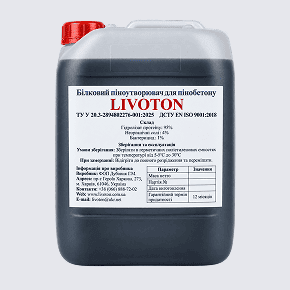
The prepared solution is fed into the foam generator and the equipment is adjusted until the desired foam structure is obtained. The indicative mass of the finished foam is about 80 g/l. Quality foam should be fine-dispersed, uniform and sufficiently stable during the technological process.
The working water-cement ratio can be 0.6–0.7 depending on the mix design. When calculating, not only the mixing water but also the water coming with the foam must be taken into account. The finished mix should be homogeneous, without lumps or pronounced separation.
When using plasticisers, accelerators or other admixtures, their compatibility with the mix design must be checked in advance. The optimal mixing time depends on the mixer type, mix volume, foam amount and target density.
The practical value of a protein foaming agent is determined not only by product consumption, but primarily by foam stability, mix uniformity, repeatability of results and convenience of the production process.
Protein and synthetic foaming agents differ in the nature of foam formation and the behaviour of the finished foam in the cement system. For a protein base, an important advantage is the ability to obtain stable fine-dispersed foam, which contributes to a more uniform foam concrete structure with a properly selected production regime.
Stable foam helps to better control the porosity of the mix, reduce the risk of uneven pore distribution and maintain predictable characteristics of the finished material. The final result always depends on the complete mix design and technology.
Stable foam retains a homogeneous structure during mixing and forming of the finished mix, without rapid settling or excessive water separation.
Even pore distribution helps to obtain a homogeneous material without pronounced voids, settling or separation over the height of the product.
Concentrate uniformity and the absence of excessive sediment ensure stable supply of the working solution and correct operation of the foam generator.
Stability of characteristics from batch to batch simplifies equipment setup and helps maintain consistent parameters of the finished foam concrete.
Real cost efficiency should be evaluated by total component consumption, required dosage and the cost of a finished cubic metre of foam concrete.
Correct selection of the foam generation regime and mix design allows achieving a stable result faster and reducing the number of trial batches.
The example below shows the principle of comparing foam concrete cost depending on the foaming agent type. The actual economics depend on current raw material prices, dosage and the specific mix design.
| Cost item | Unit | Synthetic foaming agent | Protein foaming agent | Saving | ||||
|---|---|---|---|---|---|---|---|---|
| Quantity | Price, $ | Amount | Quantity | Price, $ | Amount | |||
| Cement | tonnes | 0.35 | 150 | 52.5 | 0.31 | 150 | 46.5 | -6 |
| Sand | tonnes | 0.18 | 17 | 3.06 | 0.21 | 17 | 3.57 | 0.51 |
| Foaming agent | kg | 0.7 | 2 | 1.4 | 1.3 | 1.8 | 2.34 | 0.94 |
| Water | m³ | 0.225 | 0.5 | 0.1125 | 0.197 | 0.5 | 0.0985 | -0.014 |
| TOTAL | 57.0725 | 52.5085 | -4.564 | |||||
In the calculation example, the cost difference is about 4 USD per 1 m³. The actual figure may differ depending on raw material prices, foaming agent dosage, density of the finished material and production technology. When working with a protein foaming agent, it is also important to select and set up the foam generator correctly.
Key Livoton criteria: foam stability, product purity, sufficient load-bearing capacity of the foam, stability during mixing and uniformity of the finished foam concrete structure.
Livoton is manufactured on the basis of protein raw material and contains components that ensure the stability of the product and the foam. The formula is designed to provide predictable technological properties in foam concrete production.
This section contains information about cost, delivery terms, packaging, shipping and technical support when working with the product.
The price depends on current delivery terms, order volume and packaging format. Before ordering, ask for the current price, availability, packaging and delivery options.
Technical support helps to correctly prepare the working solution, set up the foam generator and select the operating regime according to the mix design. This is especially important when launching new equipment or switching to another type of foaming agent.
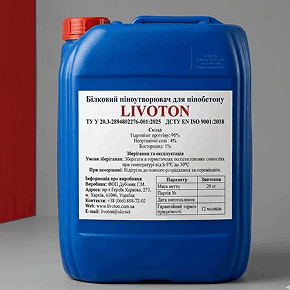
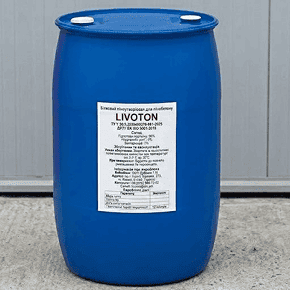
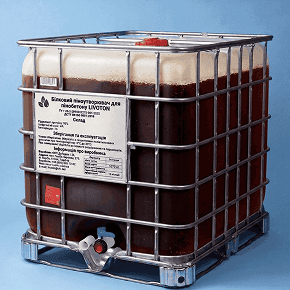
Livoton should be stored in hermetically sealed polyethylene containers. The recommended temperature range is from −5 to +30 °C.
If frozen, the product must be fully thawed without adding water, then thoroughly stirred. Packaging, container quantity and packaging format are agreed depending on the order volume.
10 kg
20 kg
230 kg
1070 kg
Delivery can be carried out by road transport within Ukraine and abroad. For domestic shipments, postal and courier services can be used, including Nova Poshta, Ukrposhta and Delivery. The delivery method is agreed when placing the order.